Why Taxonomy Comes Before Tooling
Before your team selects a questionnaire format, before you build a scoring rubric, before you wire up any integration — you need a taxonomy. A vendor risk taxonomy is the controlled vocabulary that connects the security control you care about to the questionnaire item you send, to the evidence artifact you request, to the score you assign. Without one, every part of that chain is subjective, and your scores are not comparable across vendors or over time.
This matters more than most programs acknowledge. When two analysts on the same team assess the same vendor one month apart and arrive at materially different risk ratings, the root cause is almost always a taxonomy gap — not analyst error. One person mapped "access control" to four items; the other mapped it to eight. One included privileged access management as a sub-control; the other did not. The taxonomy is what standardizes that judgment.
The Three Layers of a Controls Taxonomy
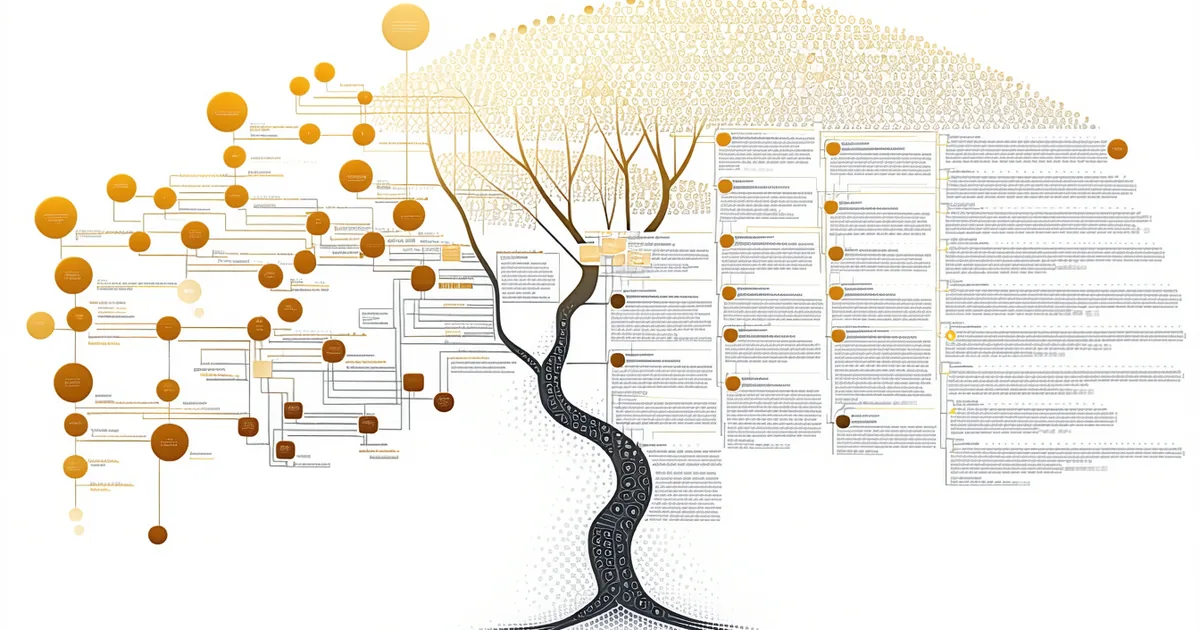
A well-constructed vendor risk taxonomy operates at three levels of abstraction, and the mapping quality at each layer determines how actionable your output is.
Layer 1: Canonical Framework Controls
At the top layer sit the canonical frameworks your program is aligned to: NIST CSF 2.0, ISO 27001:2022, SOC 2 Trust Services Criteria, CIS Controls v8. Each defines security controls at varying granularity. NIST CSF 2.0 introduced a sixth function — Govern (GV) — which now explicitly covers supply chain risk management under GV.SC, making it particularly relevant for third-party assessment programs. ISO 27001:2022 restructured its Annex A controls from 114 to 93, reorganizing supplier relationship controls under A.5.19 through A.5.23.
The key point is that these frameworks are not interchangeable. NIST CSF is a maturity framework; ISO 27001 is a management system standard; SOC 2 is an attestation standard. A vendor holding a SOC 2 Type II report does not automatically satisfy your NIST CSF GV.SC requirements — the overlap is partial and must be explicitly mapped.
Layer 2: Control Domains and Sub-Controls
Below the framework layer, you organize controls into domains — access management, cryptography, incident response, physical security, business continuity — and break each domain into specific sub-controls. This is where most programs make their first taxonomy error: they conflate the domain with the sub-control. "Identity and access management" is a domain. "Multi-factor authentication is enforced for all remote access sessions" is a sub-control. Only sub-controls can be reliably answered by a questionnaire item.
A practical domain structure for a mid-market vendor assessment program typically spans eight to twelve domains, each with four to twelve sub-controls. Anything broader becomes unwieldy; anything narrower misses material risks, particularly in the areas of data handling and third-party sub-processor controls.
Layer 3: Questionnaire Items
At the bottom of the taxonomy sit the questionnaire items themselves — the actual questions your team sends to vendors. Each item should map to exactly one sub-control. One-to-many mappings (one question covering multiple sub-controls) create scoring ambiguity: if a vendor answers "yes" to a question that covers both MFA enforcement and privileged access review, which sub-control gets credit?
One-to-one mapping discipline is harder to maintain than it sounds. The SIG (Standardized Information Gathering) questionnaire, which many teams adopt as a starting point, frequently bundles related sub-controls into compound questions. Before using SIG as your question library, you need to decompose the compound items and re-map them individually.
Cross-Framework Mapping: The Manual Tax
Most security teams managing more than 40 active vendor relationships find themselves maintaining three or four distinct questionnaire templates — one per framework their customers or compliance posture requires. The SIG, a CAIQ-aligned version, an internal template for high-risk vendors, and a lightweight intake form. Each template evolved independently, often without a canonical taxonomy connecting them.
The result is what practitioners call the "manual tax": analysts spending a meaningful fraction of their review cycle re-interpreting what the same underlying control means across four different question phrasings. A common scenario: a logistics SaaS vendor sends back a completed SIG, but your enterprise customer requires answers mapped to ISO 27001 controls. Your analyst must now translate between frameworks manually, a process that introduces interpretation drift at every step.
Cross-framework mapping tables solve this when they are maintained rigorously. NIST CPRT (Cybersecurity and Privacy Reference Tool) provides the most authoritative public mapping between NIST CSF 2.0, NIST SP 800-53, and ISO 27001:2022. It is a useful starting point, but it maps at the control level — not the questionnaire item level. Bridging from the CPRT mapping down to your specific questionnaire items is still manual work unless your tooling handles it.
A Practical Example: Mapping IAM Controls
Consider how a single domain — identity and access management — maps through the three layers in a program aligned to NIST CSF 2.0 and ISO 27001:2022.
At the framework layer, NIST CSF 2.0 addresses IAM primarily under PR.AA (Protect: Identity Management, Authentication, and Access Control), with sub-categories PR.AA-01 through PR.AA-06. ISO 27001:2022 covers the same domain under A.5.15 (Access control), A.5.16 (Identity management), A.5.17 (Authentication information), A.8.2 (Privileged access rights), and A.8.5 (Secure authentication). Those framework references map to roughly the same underlying security objective, but with different granularity and different evidence expectations.
At the domain/sub-control layer, a security team might define six IAM sub-controls: (1) MFA enforcement for all remote sessions, (2) privileged access review cadence, (3) offboarding procedure with access revocation SLA, (4) shared account prohibition policy, (5) service account inventory and review, (6) third-party access scoping. Each sub-control maps to specific NIST CSF and ISO controls in the cross-reference table.
At the questionnaire layer, each sub-control produces one or two questions. "Is multi-factor authentication required for all remote access to production systems?" maps to PR.AA-02 and A.5.17. "What is your defined SLA for revoking access upon employee termination?" maps to PR.AA-01 and A.5.18. The mapping is explicit and auditable.
Where Taxonomy Work Pays Off in Practice
A mid-market SaaS company conducting vendor onboarding for roughly 60 new vendors per year — a realistic volume for a growing enterprise with active procurement activity — will find that taxonomy rigor pays off in three concrete ways.
First, scoring consistency improves. When each questionnaire item maps to exactly one sub-control, and each sub-control has a defined weight in the risk model, score calculations become deterministic. Two analysts reviewing the same vendor response set produce the same score, because there is no interpretive step between answer and score.
Second, remediation conversations become more precise. When a vendor's access control domain scores low, you can identify the specific sub-controls that are failing rather than issuing vague remediation guidance like "improve your access management practices." The vendor knows whether the gap is in MFA enforcement, privileged access review, or offboarding procedures — and can address it specifically.
Third, framework coverage gaps become visible. If your questionnaire has dense coverage of access control but thin coverage of data retention and disposal — a common pattern in programs that evolved from IT security rather than data governance — the taxonomy makes that gap explicit. You see it in the sub-control coverage report before your auditors see it in your next SOC 2 assessment.
The Boundary Between Taxonomy and Over-Engineering
We are not saying every vendor risk program needs a six-hundred-item cross-framework mapping table before it can function. For a program assessing fewer than twenty vendors annually, a lighter-weight approach — a single questionnaire template with informal framework references — may be entirely appropriate. The overhead of maintaining a formal taxonomy must be proportional to the scale and compliance requirements of the program.
The inflection point for most security teams comes when they are managing more than thirty active vendor relationships, reporting to an audit committee or external auditor, or handling vendor risk for a regulated business line. At that point, informal approaches produce inconsistent outputs that cannot withstand scrutiny. A formal taxonomy is not bureaucracy — it is the infrastructure that makes scaling possible without scaling headcount at the same rate.
Building the Taxonomy Incrementally
The practical approach is to start with the frameworks your program is already accountable to. If your company is pursuing SOC 2 Type II certification, start there — map your current questionnaire items to the relevant Trust Services Criteria. If your largest customers require ISO 27001 alignment, add the A.5.19-A.5.23 supplier controls as your second layer. NIST CSF GV.SC coverage can follow as your program matures.
Each time you add a new questionnaire template or retire an old one, update the taxonomy first. This prevents the accumulation of orphaned items — questions in your library that map to no canonical control and therefore contribute noise rather than signal to your scoring model.
The taxonomy is a living document. Version it, review it on a defined cadence (annually at minimum), and update it when the upstream frameworks revise their control sets — as NIST did when CSF 2.0 introduced the Govern function in 2024. A stale taxonomy is almost as problematic as no taxonomy at all.
For teams ready to put this structure into a working assessment workflow, the next step is connecting the taxonomy to your questionnaire distribution and response tracking process — which is where the operational complexity of third-party risk management typically lives. That workflow is covered in our piece on automating questionnaire responses.